
There is a moment most homeowners recognise.
You send out a few enquiries, receive several quotations, line them up neatly… and realise that they might as well be written in different languages. The numbers vary wildly. One feels suspiciously low, another uncomfortably high, and a third sits somewhere in between. They’re offering no real clarity, only more questions.
This is the quiet complexity behind renovation cost Singapore homeowners often struggle with. It is not that pricing is random, it is that comparisons are rarely made on equal ground.
Because in renovation, what looks similar on paper is almost never identical in reality.
The Illusion of a Straight Comparison
At first glance, most quotations appear comparable. They list carpentry, flooring, electrical works, painting. The categories feel familiar enough to suggest consistency.
But the issue lies in what is not immediately visible.
Two firms may both quote for “kitchen carpentry,” yet one assumes laminate finishes while another prices in veneer. One includes internal fittings and soft-close systems, while the other leaves them as add-ons. Both are technically accurate, but they are not equivalent.
This is where many interior design quotation comparisons begin to fall apart. The structure may look similar, but the assumptions behind each line item differ quietly, yet significantly.
Material Specifications – The Detail That Changes Everything
Materials are often where the largest discrepancies hide, not always because they are intentionally obscured, but because they are rarely explained in full.
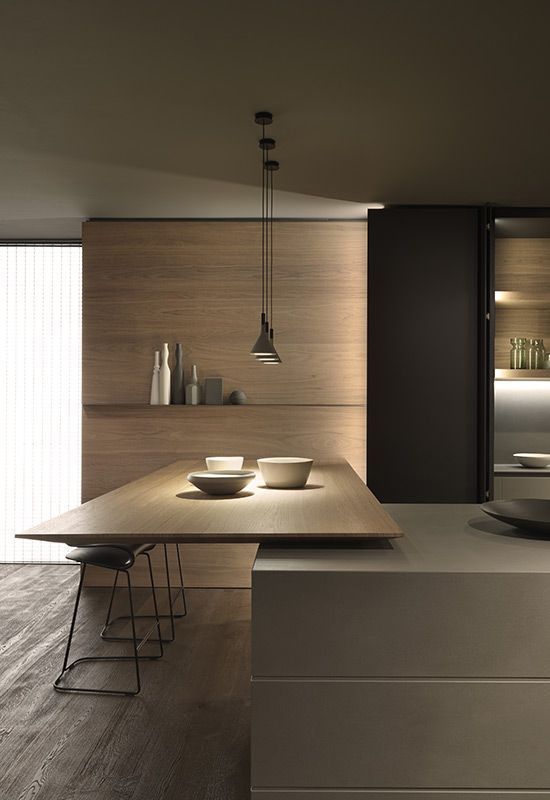
A countertop, for instance, can range from entry-level quartz to premium sintered stone. Both may be described simply as “solid surface” or “stone top” in a quotation. To an untrained eye, they appear interchangeable.
They are not.
The same applies to cabinetry finishes, flooring grades, and even hardware. A hinge system may look identical externally but differ greatly in durability and performance. Without detailed specifications, cost comparisons become surface-level. And surface-level comparisons, in renovation, are rarely accurate.
Workmanship – The Invisible Variable
If materials define what you see, workmanship defines how long it lasts. This is also the most difficult aspect to quantify within an interior design quotation. Unlike materials, which can be itemised, workmanship is embedded into the process itself.
Two contractors may quote similar figures for tiling or carpentry, yet differ in:
- Precision of installation
- Alignment and finishing
- Long-term durability
These differences rarely show up immediately. They reveal themselves over time, and you’ll surely see and feel it in the uneven joints, misaligned panels, or finishes that do not age well. The challenge is that workmanship is not easily captured in numbers. It sits quietly behind them.
What’s Included And What Quietly Isn’t
Another reason renovation cost in Singapore comparisons feel inconsistent is the question of scope. Not all quotations include the same things, even when they appear to.
Some firms (including ours) provide comprehensive proposals that factor in:
- Site preparation and protection
- Haulage and disposal
- Project management and coordination
Others may present a more stripped-down version, where these elements are either excluded or listed separately. Neither approach is inherently wrong. But when placed side by side, the difference in completeness creates the illusion of a price gap that may not fully exist. It is less about one being cheaper, and more about one being more complete.

The Role of Assumptions in Every Quote
Every quotation is built on a set of assumptions, we’re human after all. These assumptions cover everything from site conditions to client preferences, often without being explicitly stated. A designer may assume a certain level of finish, while another may price more conservatively to remain competitive.
This is where alignment becomes critical.
A lower quote may reflect fewer inclusions, simpler detailing, or standard finishes. A higher one may account for contingencies, upgrades, or a more refined execution. Without unpacking these assumptions, comparisons become misleading. The numbers tell a story, but not the full one.
Why the Lowest Price Rarely Tells the Full Story
It is tempting to anchor decisions around the lowest figure. After all, renovation is a significant investment, and cost matters. But in many cases, a lower quote is not necessarily more efficient, it may simply be less comprehensive.
Adjustments tend to surface later, and that’s commonly what people will perceive as “hidden costs in renovations”. It’s the additional charges for material upgrades, variations due to unforeseen conditions contractors don’t account for, or the changes in scope once details are clarified.
By the time everything is accounted for, the initial difference may narrow, or disappear entirely. We aren’t telling you to avoid lower quotes but understand what they represent.


Towards a More Meaningful Comparison
Comparing renovation quotations requires a shift in approach. Instead of asking which quote is cheaper, the more useful question is: what exactly is being offered?
Clarity comes from:
- Requesting detailed material specifications
- Understanding what is included within each scope
- Identifying what has been assumed rather than stated
It is a slower process, but a necessary one. Because in renovation, the value of a quotation lies not just in its total, but in its transparency.
The difficulty in comparing renovation cost Singapore quotations is not accidental. It is a reflection of how layered and nuanced the process truly is. The challenge is not simply to compare numbers, but to understand them.
Because once you do, the conversation changes. It moves away from cost alone, and towards something far more useful. Clarity, alignment, and ultimately, confidence in the decisions being made.
Contact our design team at our Contact Us page, at our main line +65 63451730 or speak to our studio directors directly at +65 97386690 (Alicia)/+65 81234411 (Eugene) today!